

Abstract
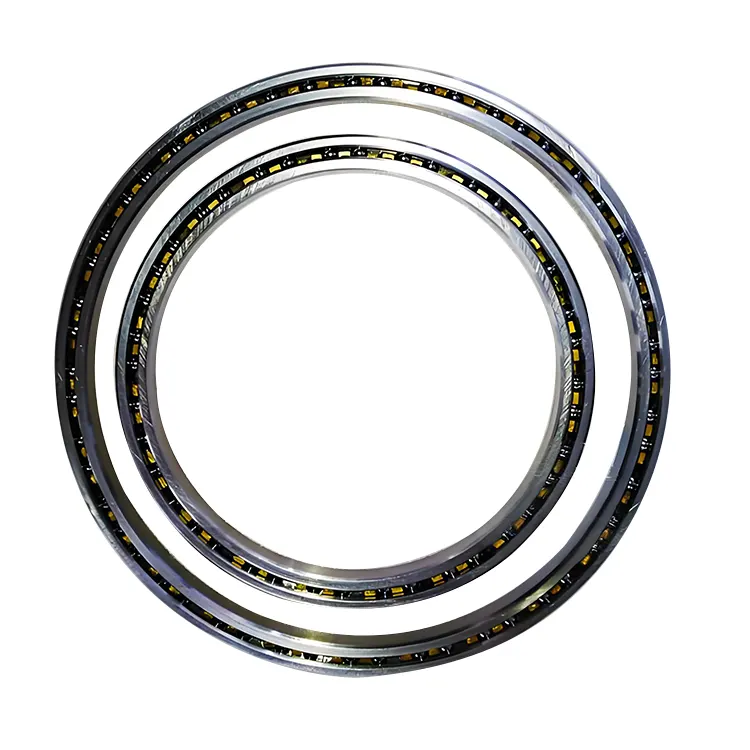
Precision equipment requires bearings that can provide stable rotation, compact installation and reliable load support. The Four Point Contact Thin Section Ball Bearing is designed for applications where limited space and multi-directional load handling are important factors.
Engineers usually evaluate bearing structure, operating conditions, mounting requirements and equipment compatibility before selecting a suitable solution for automation equipment, robotics and other precision systems.
Table of Contents
Click the sections below to explore the key selection factors:
1. Understanding the Bearing Structure
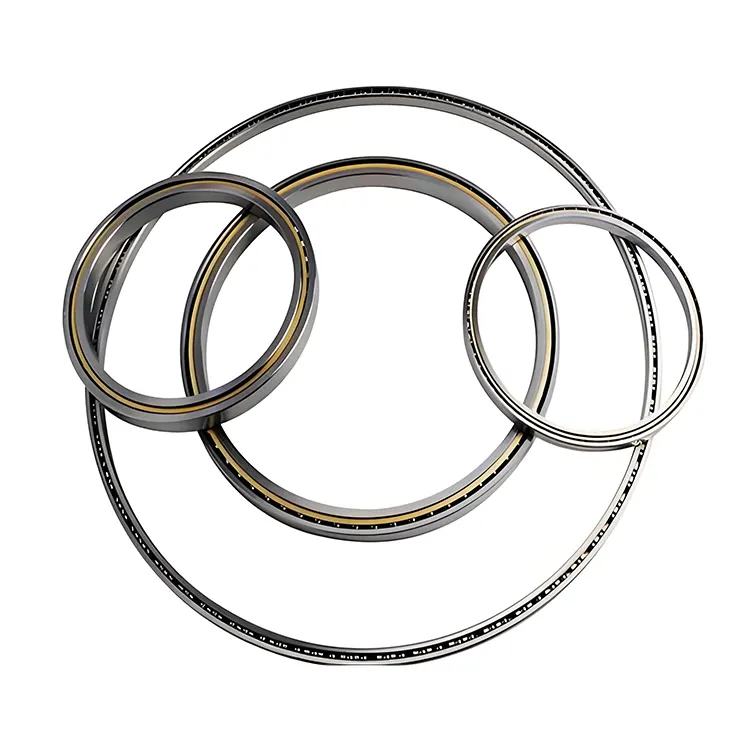
A thin section bearing uses a compact cross-section design to reduce installation space while maintaining rotational performance. The four-point contact structure allows the bearing raceway and balls to create contact points that support combined loads from different directions.
Compared with conventional bearing structures, this design is suitable for equipment where size limitations and precision requirements need to be considered together.
Main Structural Features
- Compact cross-section for applications with limited installation space.
- Four-point contact design supporting combined axial and radial loads.
- Suitable for precision mechanisms requiring smooth rotation.
- Available in different sizes and configurations for equipment integration.
2. Key Factors for Bearing Selection
Choosing the correct bearing requires engineers to review several technical conditions. Load direction, rotation speed, installation environment and equipment design all influence the final selection.
| Selection Factor | Engineering Consideration |
|---|---|
| Load Requirements | Evaluate axial, radial and moment loads according to operating conditions. |
| Installation Space | Confirm dimensions and mounting position within the equipment structure. |
| Operating Environment | Consider temperature, contamination protection and working conditions. |
| Precision Requirements | Match bearing performance with rotation accuracy requirements. |
3. Industrial Applications
The compact structure of the Four Point Contact Thin Section Ball Bearing makes it suitable for various precision applications where space efficiency and reliable movement are required.
- Robotic systems requiring compact rotational components.
- Automation equipment with limited internal installation space.
- Medical equipment requiring accurate mechanical movement.
- Inspection and positioning systems with precision requirements.
4. Manufacturing and Quality Considerations
Bearing performance depends on material selection, machining accuracy, surface treatment and inspection processes. Consistent production control helps ensure that bearings meet the requirements of different industrial applications.
KOMEL BEARING CO., LTD. provides bearing solutions for industrial applications, focusing on precision manufacturing and customized requirements for different equipment designs.
5. Frequently Asked Questions
What is a Four Point Contact Thin Section Ball Bearing used for?
It is commonly used in precision equipment, robotics, automation systems and applications requiring compact bearing structures.
Why choose a thin section bearing design?
The thin section design helps reduce installation space while maintaining suitable rotational performance for compact equipment.
What should engineers check before selecting a bearing?
Engineers should review load conditions, dimensions, operating environment and precision requirements before selection.