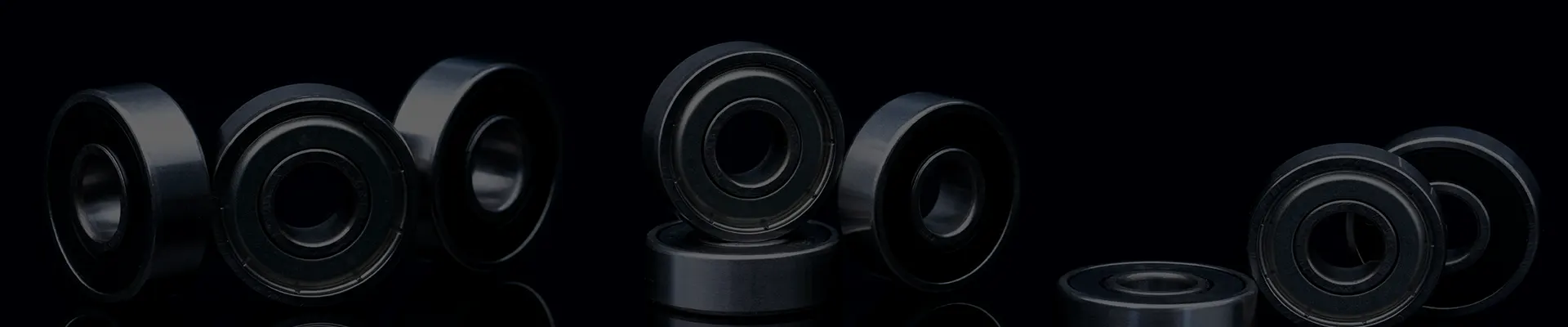
Dimensional consistency is an important factor in thin section bearing design, especially when equipment requires compact structures, precise positioning, and interchangeable components. In this article, we explain how consistent cross-sectional dimensions simplify bearing selection, support assembly accuracy, and improve equipment design flexibility. We also discuss the structural characteristics of Four Point Contact Thin Section Ball Bearings and the manufacturing controls Komel applies to maintain dimensional accuracy.
Dimensional consistency refers to maintaining controlled bearing dimensions across different size specifications. In thin section bearings, the cross-sectional dimensions are particularly important because they determine how the bearing fits into a compact mechanical assembly.
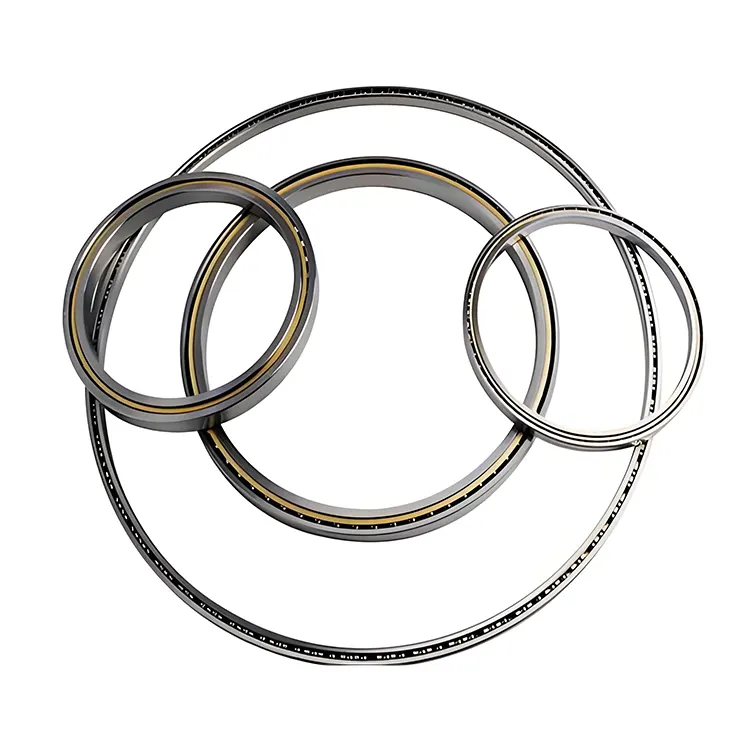
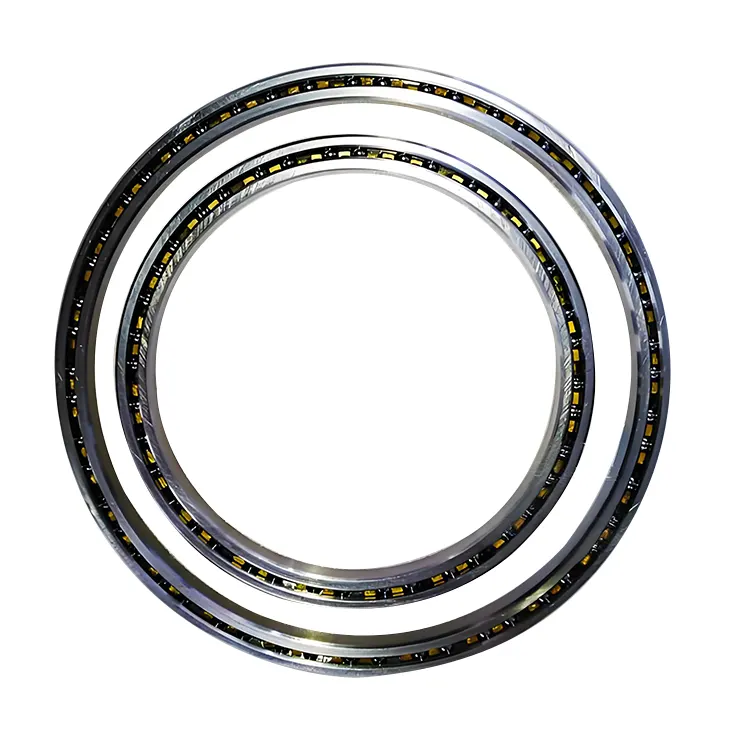
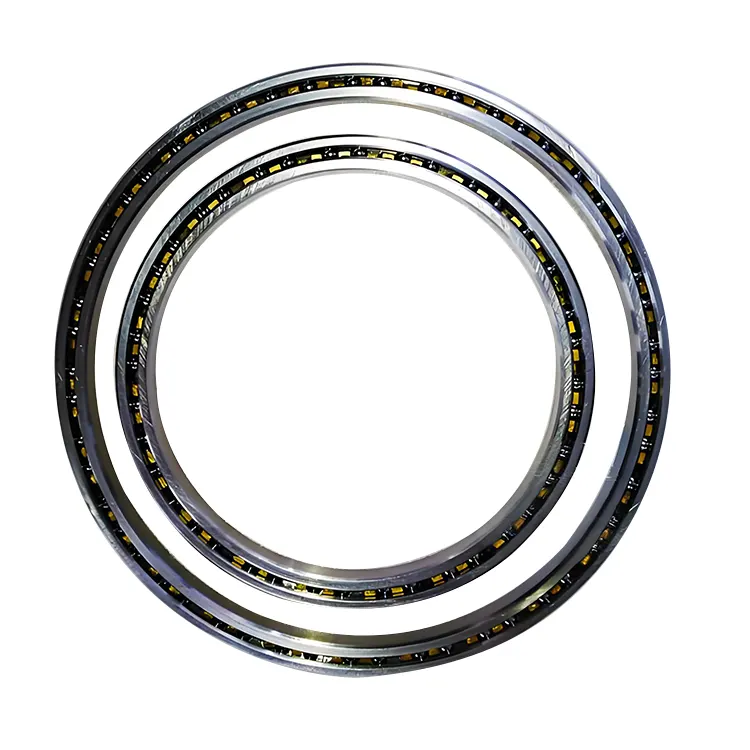
Our Four Point Contact Thin Section Ball Bearing is designed with a square cross-section. Within the same series, the cross-sectional dimensions remain unchanged even when the shaft diameter and bearing bore vary. This design allows engineers to work with different bearing bore sizes without redesigning the surrounding housing structure every time.
For example, when a machine design requires several shaft diameters but uses a standardized bearing housing, a consistent cross-section can simplify the mechanical layout. Engineers can retain the same radial and axial space requirements while selecting a suitable bore size for each shaft.
In our experience, dimensional consistency is not simply a matter of meeting drawing specifications. It directly affects equipment assembly, component compatibility, and long-term maintenance planning.
When bearings in the same series share consistent cross-sectional dimensions, engineers can standardize housing designs and mounting arrangements. This is particularly useful for equipment platforms that offer multiple shaft configurations.
Consistent bearing dimensions help reduce unnecessary adjustments during installation. When the housing bore, shoulder dimensions, and mounting interfaces are properly designed, the bearing can fit into the intended assembly more predictably.
Thin section bearings are selected when installation space and component weight are important design considerations. Maintaining a consistent cross-section makes it easier to develop compact mechanical systems without repeatedly changing the surrounding structure.
Standardized dimensions can simplify replacement planning. Maintenance teams can identify compatible bearing configurations more efficiently, provided that bore size, load requirements, internal clearance, and other specifications also match.
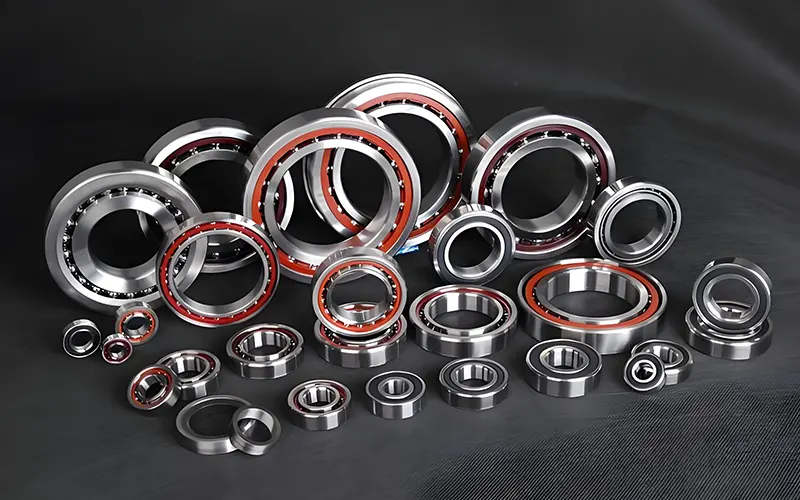
A Four Point Contact Thin Section Ball Bearing uses a specially designed raceway geometry that allows each ball to contact the raceways at four points under appropriate loading conditions. This arrangement enables the bearing to accommodate axial loads in both directions as well as radial loads, depending on the bearing design and operating conditions.
Compared with conventional radial ball bearing arrangements, the four-point contact structure can provide a more compact solution when axial load support is needed within limited installation space.
However, four-point contact does not automatically mean higher load capacity in every application. Actual performance depends on bearing size, contact geometry, operating speed, lubrication, mounting accuracy, and the applied load combination.
| Design Feature | Mechanical Function | Practical Benefit |
|---|---|---|
| Four-point contact geometry | Provides four potential contact points between balls and raceways | Supports combined radial and axial loading |
| Square cross-section | Maintains a consistent section within the same series | Simplifies housing and equipment design |
| Thin section structure | Reduces the radial and axial space occupied by the bearing | Supports compact equipment layouts |
| Different bore specifications | Accommodates different shaft diameters | Provides greater design flexibility |
Dimensional consistency is especially valuable in equipment where installation space is restricted or several mechanical configurations share a common structural design. Based on the characteristics of our thin section bearing products, the following applications are worth considering.
Robotic joints and automated positioning systems often require compact bearing arrangements. Consistent cross-sectional dimensions can simplify the development of different joint configurations while allowing engineers to select suitable bore sizes for different shaft designs.
Rotary positioning equipment requires controlled mounting interfaces and predictable bearing geometry. Dimensional consistency helps engineers maintain standardized housing arrangements, although positioning accuracy also depends on preload, clearance, shaft stiffness, and assembly tolerances.
In compact machinery, available installation space can limit the choice of bearing arrangements. Thin section ball bearings provide a space-saving option when conventional bearing dimensions are unsuitable for the mechanical layout.
Some optical instruments and measuring systems use compact rotary assemblies where bearing size and mounting accuracy are important. A consistent bearing cross-section can simplify the design of different instrument models and support standardized component interfaces.
At Komel Bearing Co., Ltd., we understand that dimensional consistency starts long before final inspection. It depends on the coordination of material selection, machining accuracy, heat treatment, grinding, and quality control throughout production.
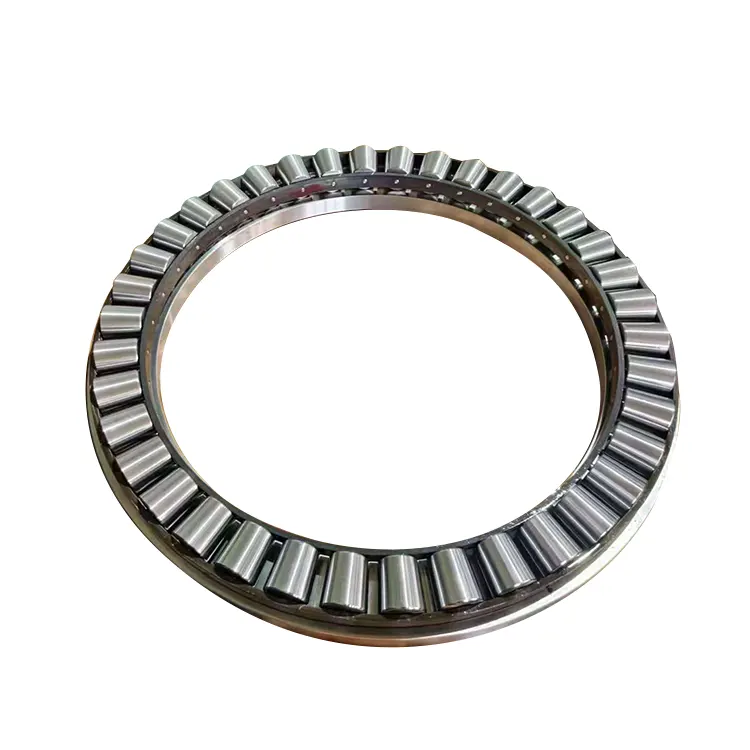
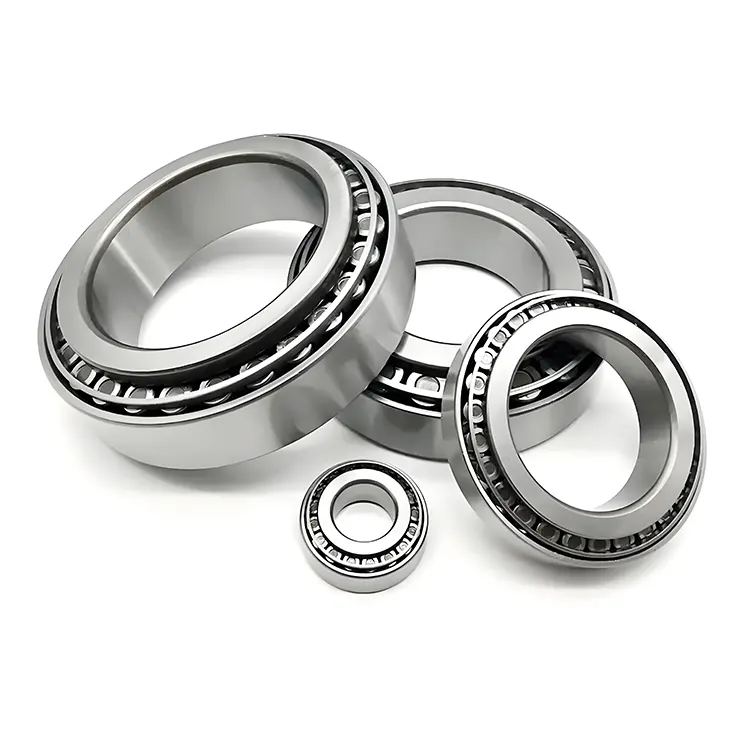
Our 12,000-square-meter manufacturing base is equipped with high-precision CNC grinding machines, lathes, heat treatment equipment, and testing facilities. These production resources support our manufacturing of roller bearings and ball bearings.
Bearing rings require accurate dimensional control and raceway geometry. CNC machining and precision grinding help control critical dimensions and surface quality. For thin section bearings, even relatively small dimensional deviations can affect the fit between the bearing and its mounting components.
Heat treatment influences bearing hardness, wear resistance, and dimensional stability. We pay attention to the relationship between heat treatment and subsequent finishing operations because dimensional changes during processing must be considered when controlling final bearing tolerances.
Final inspection is necessary to verify whether finished products meet the required specifications. Depending on the product requirements, important inspection items include bore diameter, outside diameter, cross-sectional dimensions, running accuracy, and relevant performance characteristics.
For customized bearing projects, we also consider the customer's drawings, shaft dimensions, housing interfaces, and operating conditions before confirming the appropriate product configuration.
Choosing a thin section bearing based only on its outside dimensions can lead to problems during installation or operation. We recommend checking the following technical details before confirming a bearing specification.
| Selection Factor | What to Confirm | Why It Matters |
|---|---|---|
| Bore diameter | Actual shaft diameter and fit requirements | Ensures proper shaft compatibility |
| Cross-sectional dimensions | Radial and axial installation space | Prevents housing and mounting conflicts |
| Load conditions | Radial, axial, and combined loads | Helps determine whether the bearing structure is suitable |
| Operating speed | Required rotational speed and lubrication conditions | Helps avoid unsuitable operating conditions |
| Mounting accuracy | Shaft and housing tolerances | Reduces the risk of excessive clearance or preload |
| Operating environment | Temperature, dust, moisture, and contamination | Helps determine material, sealing, and lubrication requirements |
For engineering projects with non-standard requirements, sharing the shaft diameter, housing dimensions, load conditions, and operating speed is a practical starting point. At Komel, we can evaluate these details to discuss suitable customized bearing solutions.
It allows bearings within the same series to maintain consistent cross-sectional dimensions across different bore sizes. This simplifies housing design, supports standardized mounting arrangements, and provides flexibility when developing equipment with different shaft configurations.
No. Thin section bearings are available in different internal designs, including radial contact, angular contact, and four-point contact configurations. The appropriate type depends on the application's radial and axial load requirements, speed, and installation conditions.
Yes. Its raceway geometry is designed to accommodate axial loads in both directions under suitable operating conditions. However, the actual load capacity depends on bearing dimensions, internal geometry, mounting conditions, and the applied load combination.
No. Consistent cross-sectional dimensions do not guarantee complete interchangeability. Bore diameter, outside diameter, internal clearance, contact angle, load capacity, precision grade, and mounting requirements must also be considered.
We generally recommend providing the required bore diameter, outside diameter, cross-sectional dimensions, radial and axial loads, operating speed, temperature range, and installation drawings. These details help us evaluate the design and manufacturing requirements more accurately.
Dimensional consistency is a practical design consideration that affects bearing installation, equipment standardization, and maintenance. At Komel Bearing Co., Ltd., we combine more than ten years of bearing manufacturing experience with precision machining, grinding, heat treatment, and inspection capabilities.
Whether your project requires standard ball bearings, roller bearings, or a customized Four Point Contact Thin Section Ball Bearing, our team can review your technical requirements and discuss an appropriate manufacturing solution.